I did some AI consulting for computer vision. A lot of times, the value that I brought to the company was telling them not to use AI. I was the AI expert, and they described the problem, and I said, “Don’t use AI.” This is my value add.
Last year, I went through some exercises to clarify what I do for clients. I ended up with descriptions of various lengths, but still felt like I needed something shorter and more generic. Then it hit me – I’m an AI/ML Success Architect!
To my surprise, a Google search for the exact term yielded zero results, so I quickly changed my website title to claim it. Now, it’s time to define the title in more detail.
There are three parts:
- AI/ML: Artificial intelligence and machine learning. Technically, ML is a part of AI, but given the GenAI explosion of the past few years, explicitly including ML is meant to differentiate from those who only work on integrations of pre-trained GenAI models.
- Architect: My technical background spans software engineering and data science, but I’m too old, opinionated, and expensive to be implementing tasks without having a say in higher-level planning. I still enjoy doing some implementation work, but the word Architect matches the level where I should be operating – not just engineering but also strategy and design.
- Success: This is the key difference from existing titles. Searches for “AI/ML Architect” yield many results, but the title implies there’s an AI/ML system that needs architecting. However, the best way to succeed with AI/ML is often to avoid, defer, or reframe the project. This is demonstrated by the quote from Karpathy above and by Google’s first rule of ML: “Don’t be afraid to launch a product without machine learning”. No amount of hype or tech advancement is going to change the principle of using the simplest and most cost-effective solution to a given problem. Sometimes it’s AI and sometimes it isn’t. I’m committed to the success of my clients, which means avoiding hype-driven development and AI for the sake of AI.
My commitment to AI/ML success and to serving people and causes I care about is a large part of why I work independently rather than as an employee. It makes it easier to say no to unnecessary projects, and avoid going down the path of reluctant data engineering.
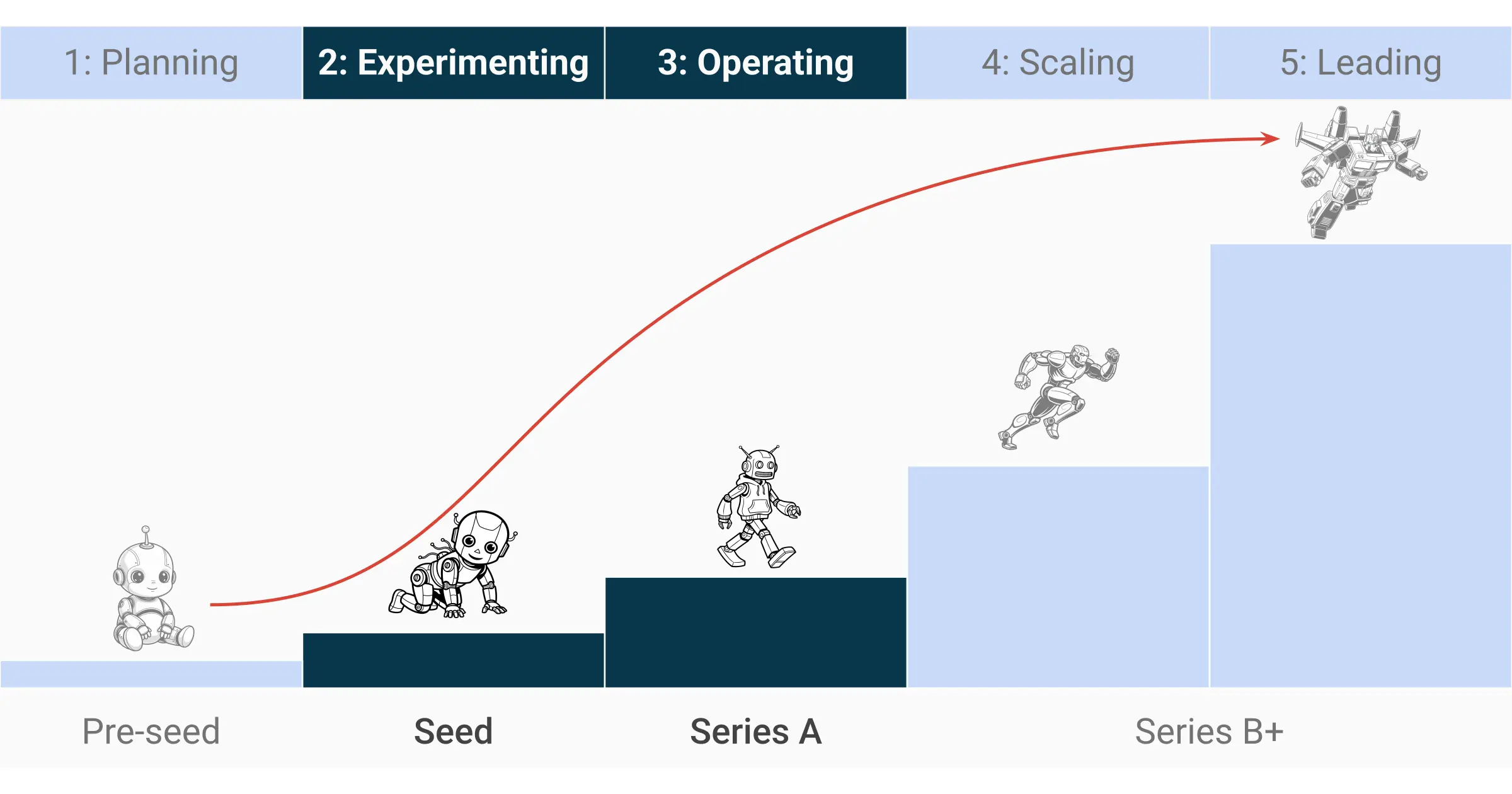
My current LinkedIn tagline is “helping climate tech founders ship AI/ML solutions that support multi-million dollar growth goals”. This means my typical leads have a low chance of success, as more than 90% of startups and 80% of AI/ML projects fail. By working with founders who are a good fit – and by helping them avoid overinvestment in AI/ML – my aim is to help them beat the odds and successfully ascend the AI/ML maturity curve. Please reach out if this sounds like you!

Typical AI/ML maturity curve for startups, highlighting the levels where engaging me as a consultant makes the most sense. Among other things, success requires matching the level of investment in AI/ML to available resources and expected business outcomes.
Public comments are closed, but I love hearing from readers. Feel free to contact me with your thoughts.